In the 1980s, a Swiss farmer named Ernst Götsch arrived in the drought-cracked hills of southern Bahia, Brazil, and did something that looked, to his neighbors, like madness. Instead of clearing more land, he planted it thicker — banana next to eucalyptus next to cacao next to forest hardwood — and let the whole tangle grow, prune, fall, and rot back into the soil. Springs that had gone dry for a generation began to flow again. Today his 500-hectare farm, Fazenda Olhos d’Água (“Eyes of Water”), stands as one of the most cited proof-of-concepts in regenerative agriculture: a system he came to call syntropic farming, built on the idea that a farm managed correctly doesn’t lose energy to entropy — it accumulates it, the way a young forest does.
Ernst Götsch
It’s a natural question to ask whether Indonesia — the country with the third-largest tropical forest estate on Earth, and a peasantry that has been farming under trees for a thousand years — has anything like it. The honest answer is more interesting than a simple yes or no. Indonesia doesn’t have one Ernst Götsch. It has several different lineages that, together, tell a strikingly parallel story — one considerably older than Götsch’s, one that started around the same time he did, and one that is explicitly borrowing his name and his method right now.
The forest that was there first: repong damar
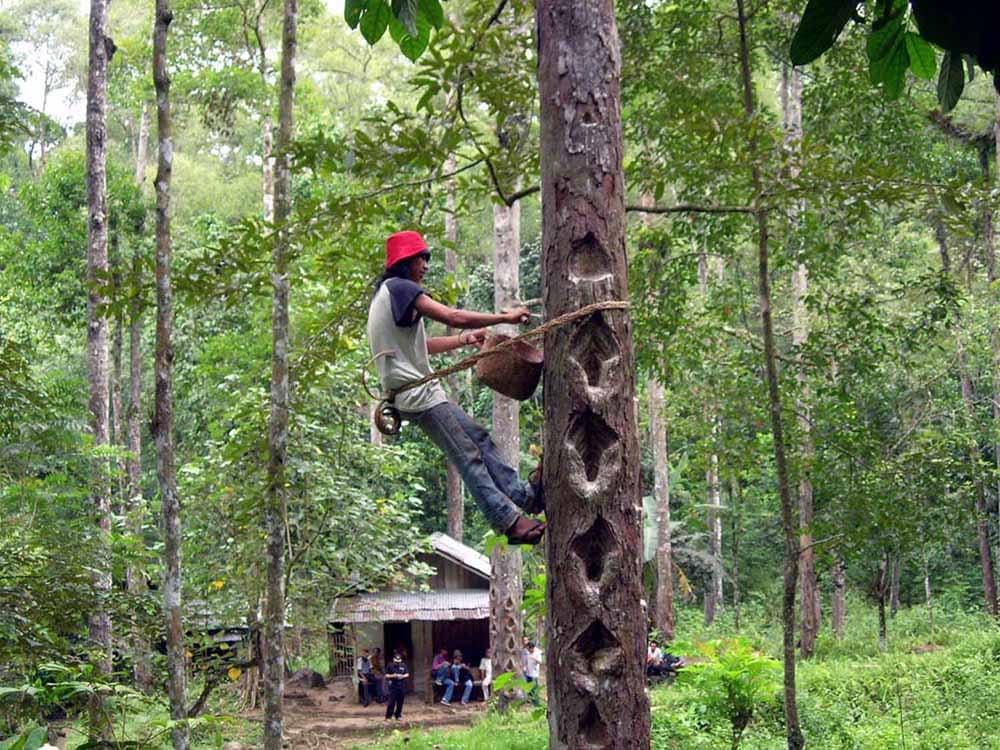
Long before “syntropic agriculture” existed as a term, farmers on the west coast of Lampung province in Sumatra were doing something remarkably similar, and calling it repong damar — the damar garden.
repong damar
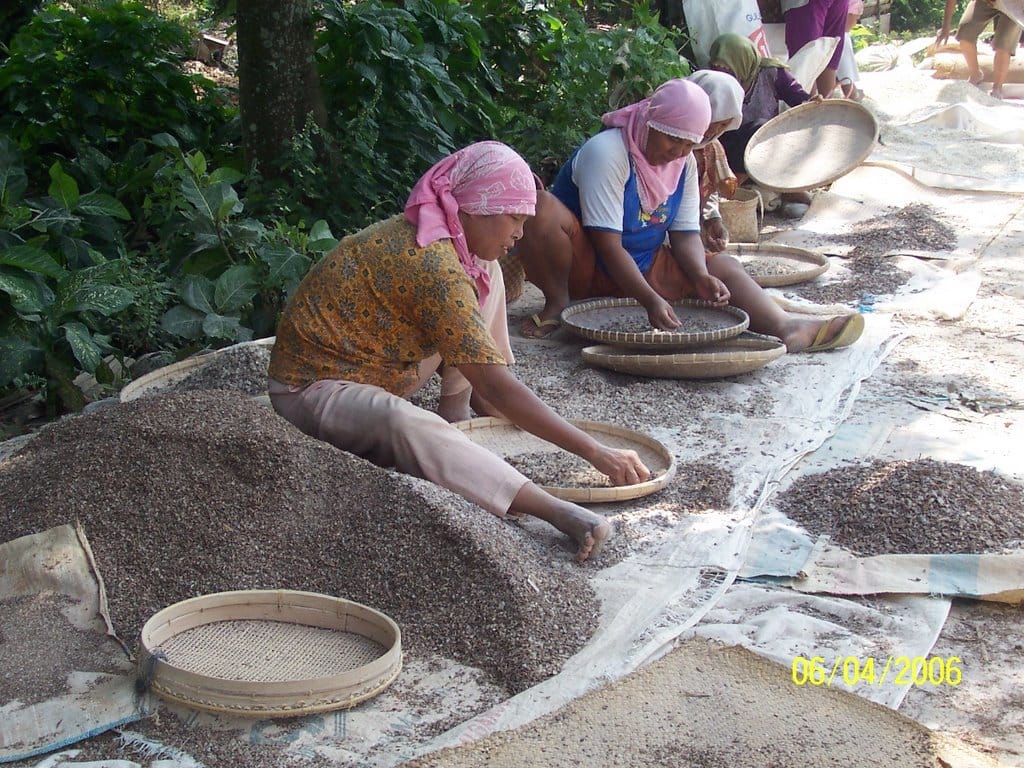
Starting in the late 19th century, smallholders in the Krui region began interplanting damar trees (Shorea javanica, a resin-producing relative of the region’s great dipterocarp forest giants) among their rice, coffee, and fruit gardens. Damar had long served for lighting and caulking boats, and had traditionally been traded as incense, dyes, adhesives, and medicines, before industrial varnish and paint factories in the West gave it new commercial value from the mid-19th century onward. Rather than logging the surrounding rainforest, farmers domesticated its structure: they let damar and other useful trees regenerate inside their fields until the garden itself became, physically and ecologically, a forest again.
Researchers describe repong damar as a forest-like land use system that smallholders developed to meet multiple objectives at once — ecological, economic, and social. Because its structure so closely resembles natural forest, it conserves a large share of the biodiversity that a natural forest would hold, while also generating a wide range of income for farmers and the traders along the damar supply chain. By the mid-1990s, satellite surveys found damar gardens covering at least 50,000 hectares along the Pesisir coast — a canopy planted, tree by tree, by families rather than by any government program.
The parallel to Götsch is almost eerie. One of the most striking parts of the damar story is that establishing the system takes farmers twenty to twenty-five years — almost exactly the multi-decade horizon over which Götsch’s own farm matured from bare pasture into productive rainforest. Both systems reject the idea that a “productive” farm and a “forest” are different things. Both use fast, useful pioneer species to shelter and shade slower, higher-value trees into existence. And both were, crucially, invented by farmers working from careful observation rather than agronomists working from a laboratory. The difference is that Götsch systematized his method into a transferable philosophy with named principles, workshops, and a global following, while repong damar remained — for most of the twentieth century — a local, largely undocumented inheritance, passed from parent to child rather than taught in a course.
The pioneers who came after: Bumi Langit and the permaculture generation
If Indonesia has a single figure who occupies something like the cultural role Götsch plays in Brazil — the outsider-turned-insider who quit a conventional life to prove that a forest could feed a family — it may be Iskandar Waworuntu.
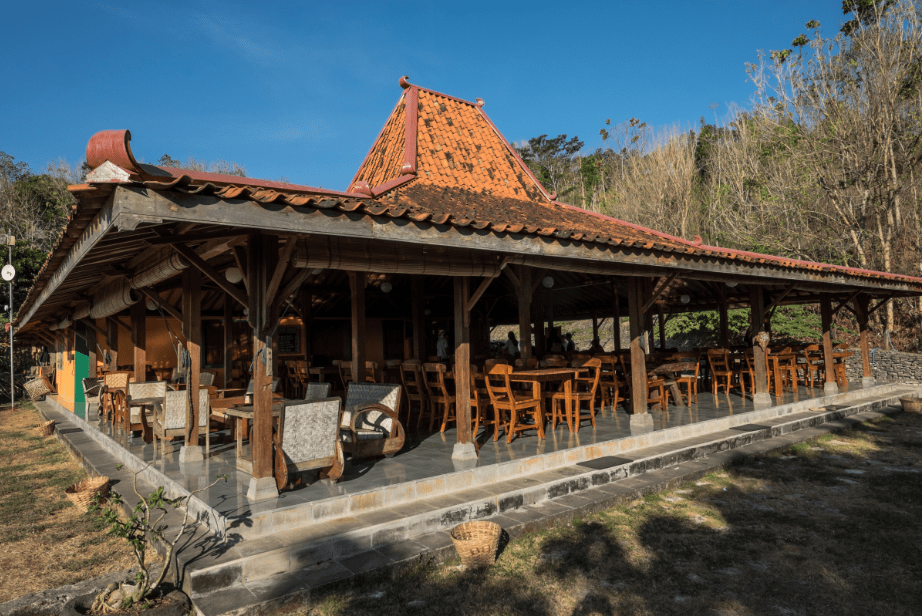
Bumi Langit
In 2006, on a stretch of dry hillside in Imogiri, near Yogyakarta, Waworuntu founded what became Bumi Langit Institute — three hectares that now stand as a working demonstration of permaculture, blending local ecological knowledge, appropriate technology, and spiritual practice. His stated approach was to design the land for the long term, incorporating hundreds of plant species over roughly fifteen years to build a self-sustaining food forest. The farm since become a pilgrimage site of sorts: thousands of participants, including students from Gadjah Mada University, have gone through two-week Permaculture Design Courses to learn ecosystem design, organic growing, and food processing directly on site.
The resemblance to Agenda Gotsch’s role in Brazil is structural as much as personal. Both are led by a charismatic founder who reframes farming as a philosophical and spiritual practice, not just a livelihood. Both attract international visitors and volunteers. Both function less like a farm and more like a living classroom — the place you go not to buy vegetables, but to be shown, physically, that degraded land can be reversed. Permaculture and syntropic farming are cousins rather than twins (permaculture is a broader design philosophy covering water, energy, and buildings, while syntropic farming is a more prescriptive method built around forest succession), but the cultural function Bumi Langit performs in Java is close to the one Fazenda Olhos d’Água performs in Bahia.
The direct import: syntropic farming, by name, in West Java
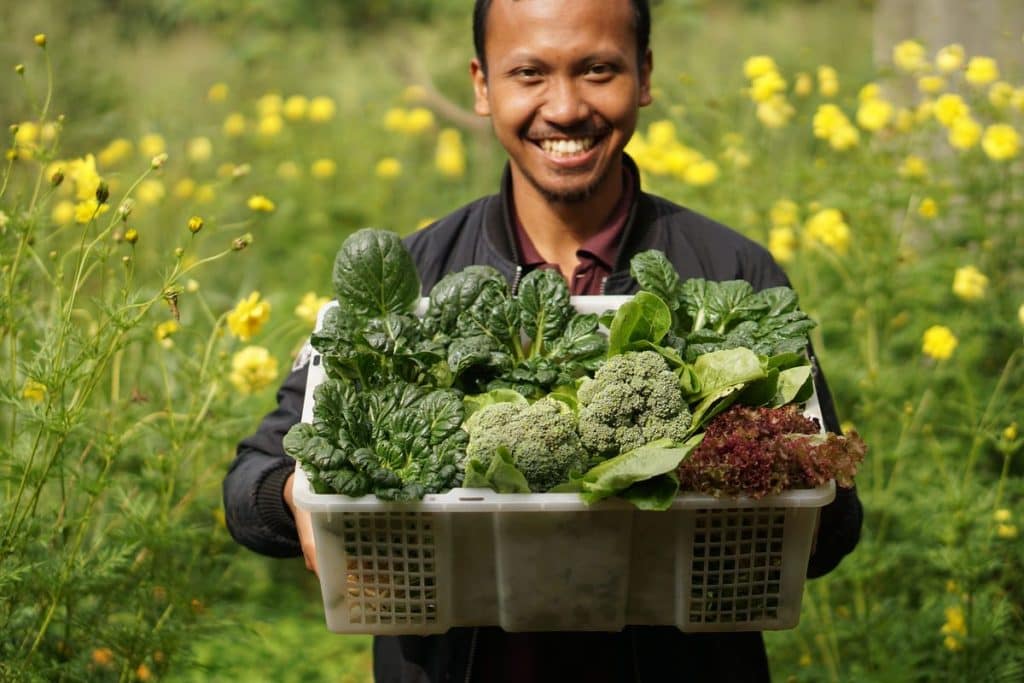
Indonesia doesn’t only have parallels to Götsch’s work — it now has practitioners explicitly using his method and his vocabulary. On the slopes of Gunung Gede in Sukabumi, West Java, a family-run organic farm called Sukasantai has folded syntropic agriculture into its own transition away from chemical inputs, publishing explainers on Götsch’s principles for an Indonesian audience and tagging its own plots with the same terms — syntropic agriculture, agroforestry, regenerative farming — that define his movement in Brazil. It’s a small-scale, farmstay-based example rather than a national campaign, but it shows something important: the Götsch method itself, not just its underlying logic, is now being deliberately transplanted into Indonesian soil, by farmers who found his ideas online and adapted them to a volcanic highland half a world away.
The institutional backbone: why Indonesia never really left agroforestry behind
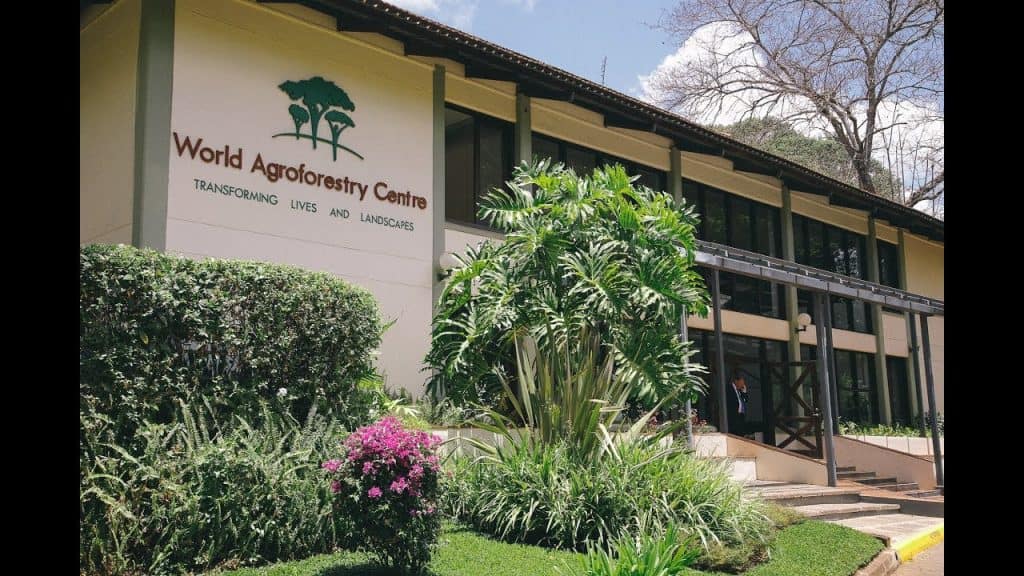
There’s a fourth strand that has no single face at all, but may matter more than any individual farm: research infrastructure. The global World Agroforestry Centre — now merged with the Center for International Forestry Research into CIFOR-ICRAF — has had a major hub in Bogor, Java, for decades, and it was ICRAF researchers who first documented and named systems like repong damar for the outside world, and who helped secure the 1998 government recognition that protected Krui’s damar farmers’ land rights inside a legally designated state-forest zone.
This matters because it means Indonesia’s agroforestry tradition was never dependent on one charismatic pioneer proving the concept from scratch, the way Brazil’s syntropic movement largely was. Indonesia’s version runs on parallel tracks: a genuinely ancient farmer-invented forest-garden tradition (repong damar, along with related systems like Javanese home-gardens and Sundanese talun-kebun rotational tree-and-crop plots), a modern permaculture-and-spirituality movement built around individual teachers like Waworuntu, small farms now consciously adopting Götsch’s own method and language, and a standing scientific institution that has spent forty years studying, defending, and exporting the knowledge of all of the above.
Two roads to the same forest
Brazil and Indonesia arrived at strikingly similar conclusions from opposite directions. Götsch had to invent syntropic farming because the systems around him — cattle pasture, soy monoculture, slash-and-burn cacao — had already erased the region’s forest memory. He was reconstructing, from ecological first principles, something the landscape had lost. Indonesian smallholders in Krui, by contrast, never lost that memory in the first place; they built repong damar by gradually asking their existing forest to also feed and pay them, one useful tree at a time.
The result is that Indonesia doesn’t have an exact equivalent of Ernst Götsch — a single evangelist whose farm became a global reference point for an entire named method. What it has may be more resilient: a living continuum stretching from centuries-old damar forests in Sumatra, through Iskandar Waworuntu’s spiritually-inflected permaculture in Java, to small farms in the Sukabumi highlands now deliberately practicing Götsch’s own techniques under his own name — all of it backed by a research institution that has spent decades proving, in scientific language, what Indonesian farmers already knew: that a forest and a farm were never supposed to be different things.